Tea Ceremony in Chinese Tradition and Its Stages
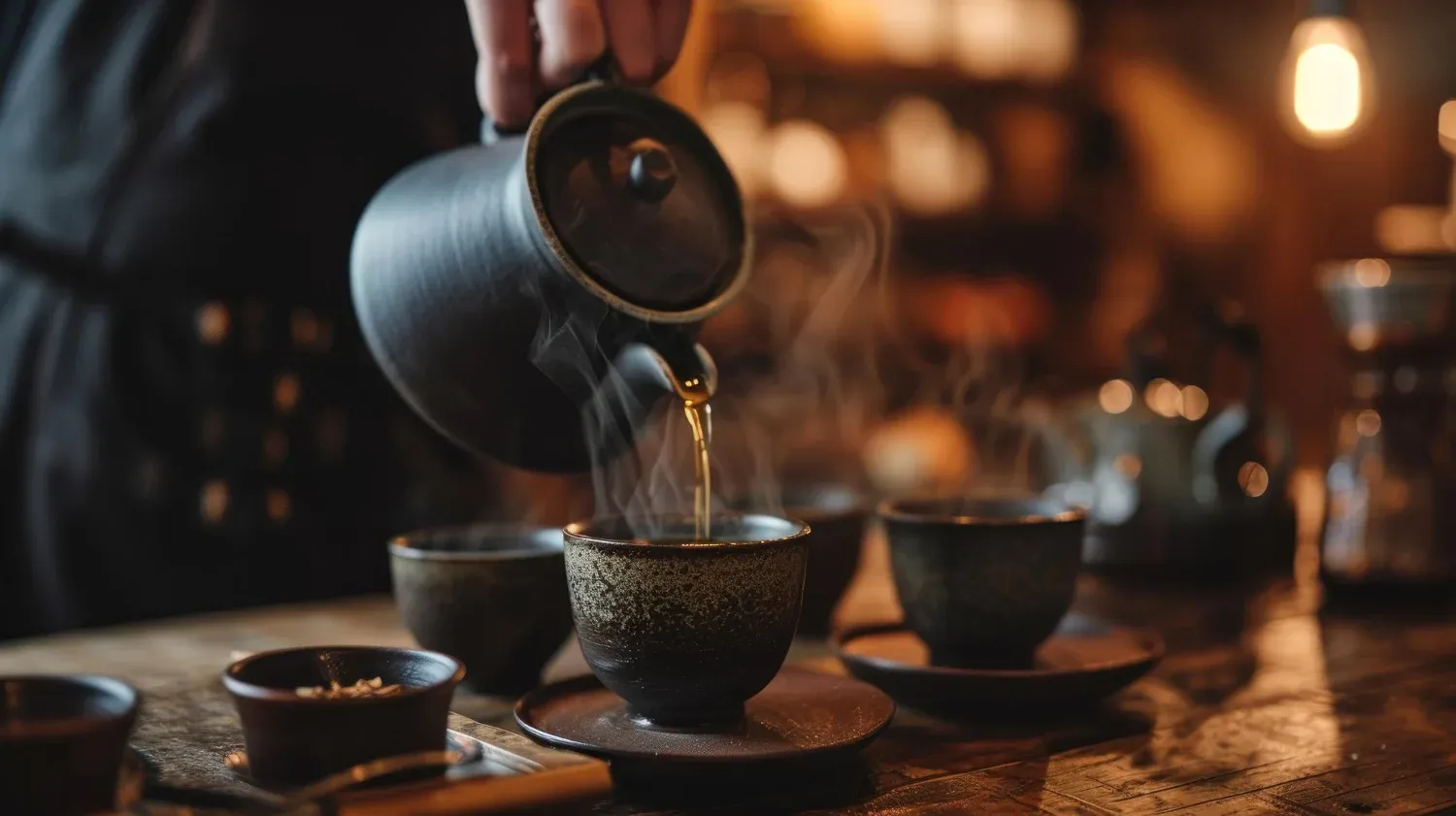
The ceremonial preparation of tea in the Chinese tradition is an art that has connected people with nature and with each other for more than a thousand years. Explore a fascinating world where China's traditional teas become a guide along the path of serenity and authentic taste.
What is the Chinese Tea Ceremony?
When most of us reach for a tea bag in the morning and pour boiling water over it, in China the same gesture can last up to an hour and consist of a dozen precise steps. Ceremonial tea brewing is not a rush, but a conscious slowdown. Unlike the Western approach, where tea is often just a backdrop for other activities, the Chinese tradition makes it the main protagonist. Chinese tea in a ceremony is not an addition to a conversation, but a dialogue in itself.The difference between ordinary brewing and ceremony lies in the intention. When you pour water on the leaves, with full attention, you watch them dance in the dish and inhale the unusual aromas that are released. You transform a simple act into a spiritual practice. This is what makes even the simplest oolong taste like ambrosia of the gods
The ancient secret of the Chinese sages for stress and anxiety
The history of ceremonial tea drinking began in the 8th century, when the monk Lu Yu wrote “Cha Jing”, or the world's first treatise on tea. This 7,000-word treatise not only described brewing techniques, but treated tea as a spiritual medium.The true cradle of the ceremony is the tea province of China - Fujian, where in the town of Chaozhou, about 300 years ago, the Gongfu Cha method was born. Local traders, having access to the best teas from the nearby Wuyi Mountains, developed the technique of repeatedly brewing small portions in miniature vessels. From Fujian, the tradition spread to Guangdong, where it became a daily ritual. In Hong Kong, you can still see older men sitting in parks with portable tea sets, patiently brewing another deluge of their favorite oolong.What was born as a local custom today finds new adepts around the world. Modern ceremony combines ancient wisdom with the need to quiet down in a busy world.
Why is Gongfu not just a martial art?
The name “Gongfu Cha” literally means “tea that requires skill and time”. It is no coincidence that the same word “gongfu” is used as in martial arts. Both practices require patient learning, precision and full commitment. The Gongfu method of preparing teas from China is an art that can be observed for hours. The master of ceremonies moves with the grace of the dancer - each gesture is smooth, thoughtful and has its purpose. There is no place for haste or inattention here. The philosophy of Gongfu Cha is based on four pillars that permeate the entire ceremony:
- Harmony () means a balance between all the elements - the temperature of the water, the amount of tea, the brewing time and the mood of the participants. When one element is wrong, the whole ceremony loses its magic.
- Respect () is manifested in the way each element of the ceremony is treated. Tea is a gift of nature, dishes are the work of a craftsman, water is a life-giving force. Everything deserves attention and gratitude.
- Purity () is not only clean dishes and fresh water. This is, first of all, a clear mind, free from everyday worries and distracting thoughts.
- Tranquility () arises naturally when the previous three principles are fulfilled. This is a deep silence, in which you can hear only the gentle gurgling of water and the quiet tapping of ceramics.
Unlike the Japanese tea ceremony, which resembles a precisely directed performance, the Chinese tradition allows for spontaneity. You can talk, laugh, share stories. The main thing is not to lose respect for the moment.
{{ctablock}}
Objects that turn a table into an altar
The very preparation for the tea ceremony can be a meditative experience. Each vessel has its role. Each gesture associated with the preparation builds the atmosphere of the upcoming ceremony.
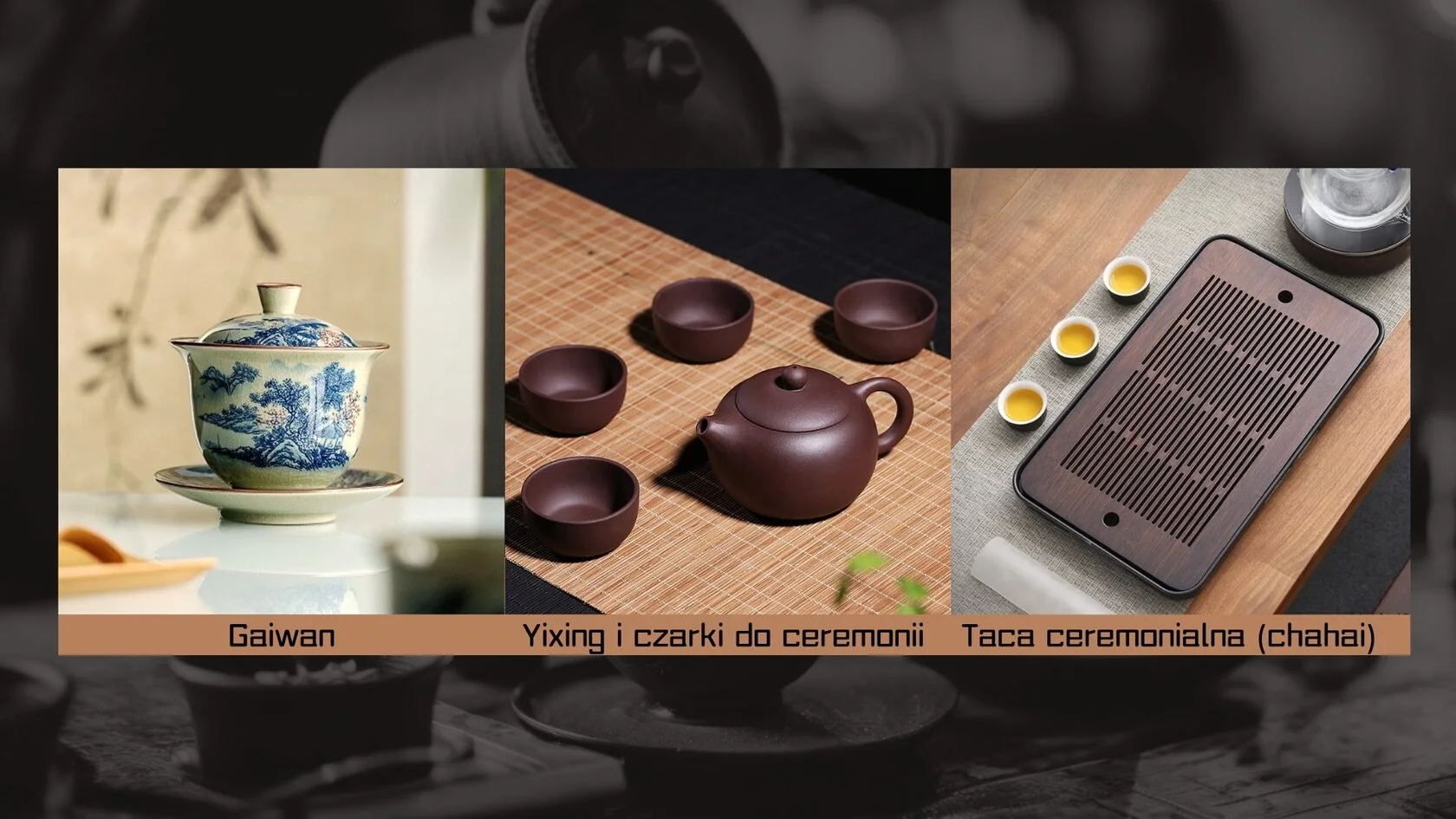
Gaiwan
A ceramic vessel consisting of a cup, lid and stand is the heart of the Chinese ceremony. Its capacity is usually from 100-150 ml, which allows for intimate brewing for 2-3 people. The lid is used not only to cover, but also to gently stir the tea and control the temperature.
Yixing Teapots
Purple clay teapots are legendary dishes that “remember” the taste of tea. After years of using them for the same type, it is enough to pour them with hot water to obtain a delicate infusion. One teapot = one tea - the sacred rule of Yixing users.
Ceremony Bowls
They are small, without handles, often no larger than a thimble. Why? Because they allow you to feel the warmth of the infusion in your hands. The small size makes every sip a conscious experience rather than mindless sipping.
Ceremonial tray (chahai)
A ceremonial tray with a built-in drain is a practical solution that allows you to freely pour the first brews and accidental spills. The best are those made of bamboo or stone, that is, materials that do not absorb odors.
Water is the foundation of a good tea ritual. Ideal has a mineralization of 50-150 mg/l - enough to bring out the taste of tea, but not enough to obscure it. The water temperature is not universal: delicate white tea requires 75°C, while fermented Pu Erh needs boiling water of 100°C.
Why do we always pour the first brew into the sink?
In the port of Gdynia stands a ship with an unusual history. ORP Błyskawica is the only destroyer in the world that survived the entire Second World War — from the first firing in Gdansk to the surrender of Germany. Visiting this ship is a journey through the darkest period of the 20th century.On board, everything remained as it was in 1945. In the officers' cabins lie books and documents. There are ammunition boxes next to the guns. In the radio station, the indicators of the cameras with which orders were taken from London are flashing.Opening hours: from Tuesday to Sunday — 10:00 to 18:00, is closed on MondaysTicket prices: normal — 30 PLN, reduced — 15 PLN, family (2+2) — 75 PLN, Friday — free admission
Stage 1: Creating Sacred Space
The ceremony begins even before the first contact with tea. We choose a quiet place where no one will disturb. It can be a corner in the living room, a balcony overlooking the greenery, or even a desk at work. It is important that this is your space for the moment.We spread the dishes on the tray in a thoughtful order. Gaiwan in the middle, cups on the right, additional bowl for infused tea (chahai) on the left. These are not rigid rules, but a practically worked out layout that makes every movement natural and smooth.We warm up all the dishes with hot water. This step is not only hygiene — it is preparing the ceramics for proper work. Cold gaiwan will take away the heat from the first brew, which can spoil the delicate harmony of flavors.
Stage 2: Awakening Sleeping Tea
We pour the tea into the warmed gaiwan, about a third of its capacity, that is, 5-7 grams. This may seem like a lot compared to Western standards, but Chinese brewing methods require courage in the choice of proportions.The first contact with water is the “awakening of the leaves”. We pour tea with hot water, cover with a lid and immediately pour off the water. This first brew is not for drinking - it is washing the leaves from dust and a signal for tea that it's time to wake up. We observe how dry, twisted leaves begin to unfold under the influence of heat. We hear a gentle murmur, we see the first colored traces in the water. It is a moment full of anticipation, like the first drops of rain foreshadowing the arrival of a storm.
Stage 3: First real brewing
Again we pour the leaves with water of the right temperature, but this time we count down the time. The first brew for most teas is 20-30 seconds. Long enough for the tea to give up its basic aromas, but not enough to become bitter.We cover the gaiwan with a lid, gently turn half a turn to the right, then to the left. This is not mandatory, but it helps to mix the infusion evenly. We hear the leaves dancing in the water and see how its color changes.As time passes, we pour the infusion into the cups in one smooth motion. The main thing is to pour evenly, because each cup should have an infusion of the same strength. Experienced masters are able to divide 100 ml of infusion into five equal portions without using an intermediate jug.
Stage 4: Journey through the next flood
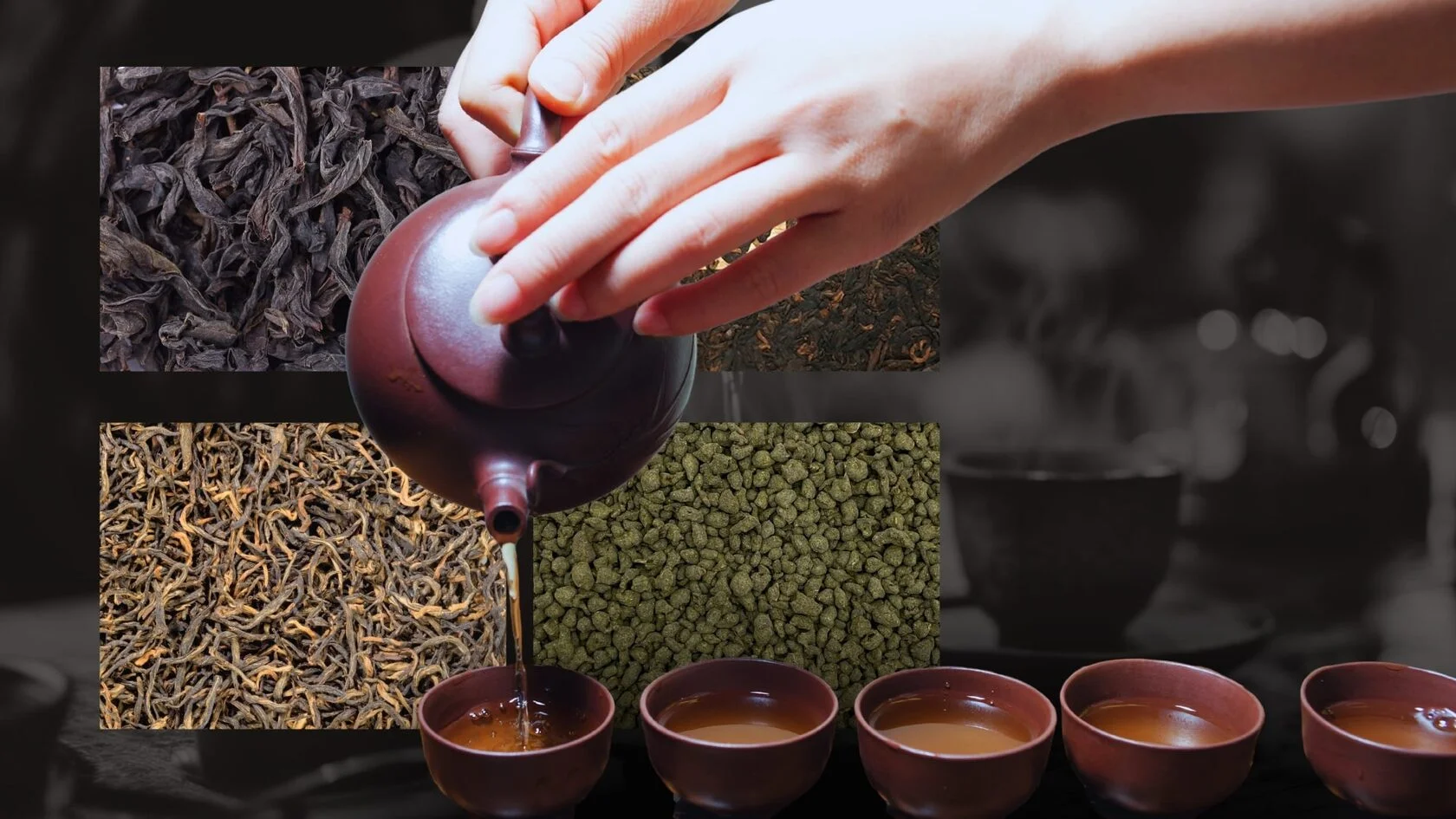
This is where the real mystery of ceremonial preparation begins. Good quality tea leaves can be brewed up to 6-12 times, and each infusion reveals new frontiers of flavors. It's like listening to a symphony — each part has its own character, but they all form a coherent whole. The second brew usually lasts 30-40 seconds and is often the most intense. The third may already require a minute, the fourth - one and a half. There are no hard and fast rules. We are guided by taste and our own intuition. We observe how tea evolves. The first overflow can be floral and delicate, the second - intense and full, the third - sweet and balanced, and the last - subtle and nostalgic. It is a journey through the layers of flavor that the tea hid in its leaves.
Stage 5: Farewell to tea
The ceremony ends naturally when the tea ceases to give off flavor. There is no sadness in this. Each tea has its life cycle, like every beautiful moment has its end.The last gesture is to rinse all the dishes with clean water and let them dry. Some like to look at the wet leaves in gaiwan at the end. It's like reading from the coffee grounds, only more poetic.
{{ctablock}}
5 teas that only true connoisseurs will recognize
The classification of tea in China is mainly based on the degree of fermentation — from almost unfermented greens, through partially fermented oolongs, to fully fermented black and post-fermented dark. Each of these types of tea has its place in the ceremony and requires a slightly different approach.
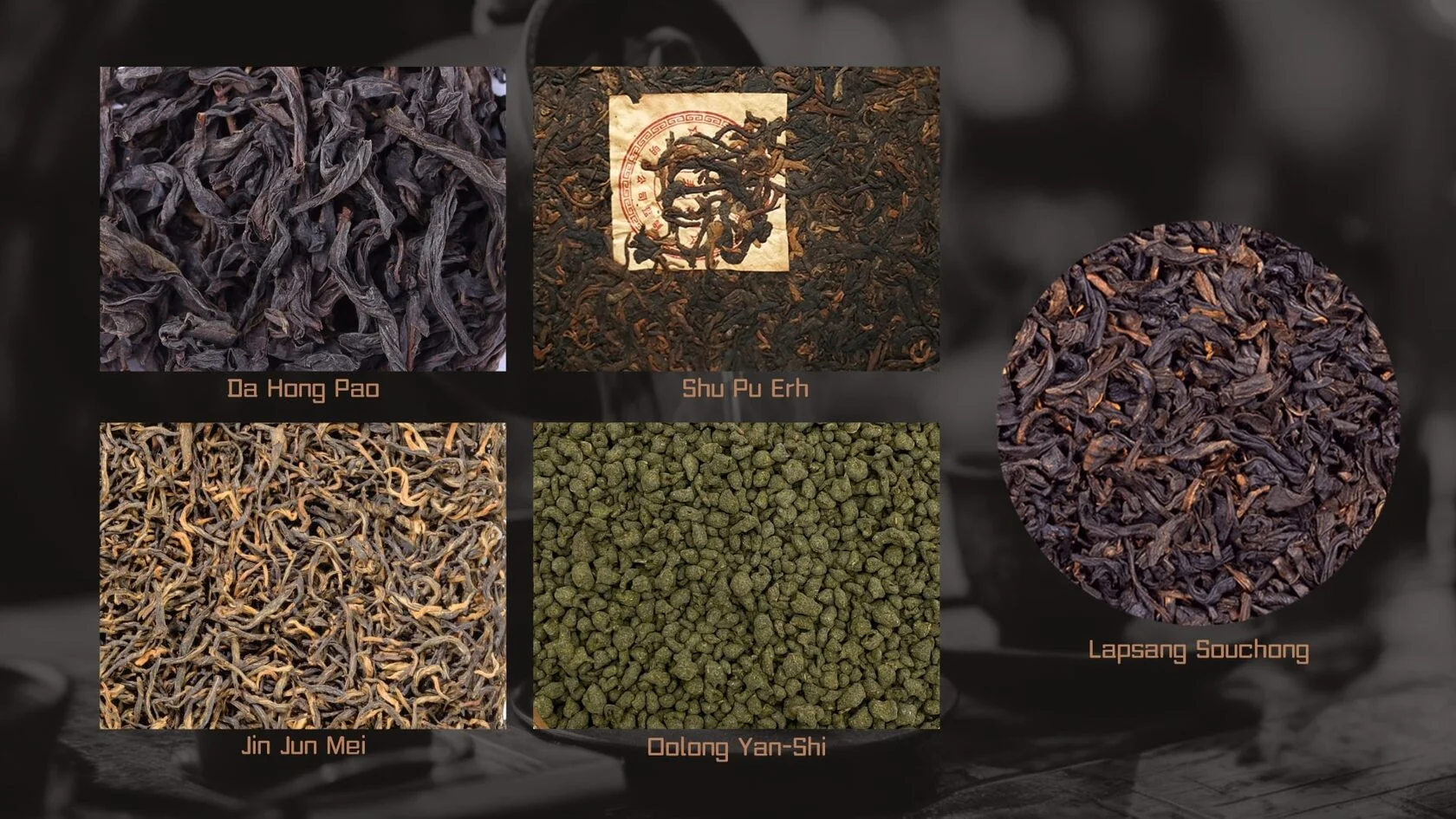
Da Hong Pao - the legendary Great Red Robe
From Hong Pao is a tea shrouded in legends. The story tells about a scientist who, going to the imperial exams, fell ill in the Wuyi Mountains. A monk from a local temple gave him an infusion of nearby bushes, which restored his strength. The scientist passed the exams with the highest score and became a minister.When the empress's mother fell ill with a mysterious disease, the minister remembered the miraculous tea. The infusion did help, and the grateful emperor ordered to cover the bushes with red robes in a gesture of respect — hence the name “Great Red Robe” .This Chinese tea from the Wuyi Mountains belongs to the group of rock teas (yancha), which grow in rock crevices and exhibit a distinctive mineral flavor. Da Hong Pao is an oolong with a high degree of oxidation (about 60%) and additionally roasted, which gives it a deep, caramel-nutty flavor profile.Ceremonial brewing of Da Hong Pao:
- Quantity: 6-7 g per 100 ml of water (fills about 1/3 of the gaiwan)
- Temperature: 95-100°C - boiling noise
- First brew: 30 seconds
- Subsequent brews: 45 seconds, 1 minute, 1.5 minutes...
- Number of waterings: 6-8 times
Dry dry has a dark, almost black color with rusty reflections. When flooded with water, the leaves unfold, showing a green interior with red edges - this is a sign of proper oxidation. The infusion has an amber color with copper reflections, and the aroma combines roasted notes with floral accents.In the first pouring, mineral notes of stones and light sweetness prevail. The second and third brews reveal the fullness of taste — caramel, dark chocolate, dried fruit. The last overflows become more and more subtle, leaving a long, warm aftertaste.
Shu Pu Erh - dark magic from Yunnan
Shupuerh is the result of one of the most fascinating processes in the world of tea, namely controlled microbial fermentation called “wo dui”. This method was developed in the 1970s to speed up the natural aging process of Pu Er tea. In the traditional wo dui process, tea leaves from Yunnan Province are stacked in meter-high piles, sprayed with water and covered with damp cloths. The temperature inside the stack rises to 60° C, and special microorganisms begin the fermentation process, which lasts from 40-60 days.The result is a tea with a characteristic earthy taste resembling a wet forest after rain. Well-conducted fermentation makes Shu Pu Erh gentle on the stomach and has probiotic properties.Ceremonial brewing of Shu Pu Erh:
- Quantity: 5-7 g per 100 ml of water
- Temperature: 100°C - full boiling
- First brewing: 15-20 seconds
- Next: 20, 30, 45 seconds, a minute...
- Number of waterings: 8-12 times
Dry dried has a dull, dark brown color, often with visible “golden tips” — young donuts that add sweetness. After pouring, the leaves grow to impressive sizes, showing their true greatness. The infusion has a deep, brownish color, reminiscent of strong coffee. The aroma is earthy, but without unpleasant mustiness. Good quality Shu Pu Erh smells like wet ground in the forest, not like a cellar.The taste develops gradually. The first pouring may be slightly bitter, but the subsequent ones become more and more balanced and sweet. There are notes of wet wood, mushrooms, prunes, and sometimes even delicate notes of chocolate.
Jin Jun Mei - the golden monarch among teas
Jin Jun May It is one of the youngest, but also the most expensive teas in the history of China. It was created only in 2005 in the Tongmu Guan Reserve in the Wuyi Mountains, but it quickly gained the status of a luxury tea. The name literally means “Golden Beautiful Eyebrows” and refers to the shape and color of the young donuts from which this Chinese tea is made. To produce one kilogram of finished tea, it is necessary to collect 60-80 thousand individual donuts (all by hand) in just a few days in early spring.Jin Jun Mei is black tea (in the Chinese classification “hongcha” - red), but produced with remarkable precision. The donuts are gently dried and fermented, which preserves their natural sweetness and complexity of aroma.Ceremonial brewing of Jin Jun Mei:
- Amount: 4-5 g per 100 ml of water (lighter than oolongs)
- Temperature: 90-95°C - no boiling!
- First brewing: 20-30 seconds
- Next: 30, 45 seconds, a minute...
- Number of waterings: 5-7 times
Dry rusks are small, golden donuts with a silky sheen. When we first absorb their aroma, we can feel a mixture of honey, chocolate and dried fruits. This is a harbinger of an extraordinary experience.The infusion has a golden-orange color, clean and shiny. The aroma is intense, but elegant. Acacia honey with notes of dark chocolate and subtle florality predominates. The taste of Jin Jun Mei is a real symphony. The first pouring brings freshness and vivacity, the second — fullness of taste with the predominant sweetness of honey. The third and fourth brews reveal deeper, chocolate and fruity notes. The last overflows are tender, nostalgic and leave a long, sweet aftertaste.
Ginseng Oolong - when tea meets medicine
Ginseng Oolong (Oolong Yan-Shi) is a fascinating combination of semi-fermented oolong tea with powdered Asian ginseng root (Panax ginseng). This unique blend is made by rolling the oolong leaves into tight balls, which are then enriched with powdered ginseng. The visual effect is spectacular because the small, dark green “pebbles” develop into large leaves during brewing, releasing the ginseng hidden inside. This is the theater of nature that takes place in Gaiwan. Ginseng has been one of the most valuable plants in Chinese medicine for thousands of years. Its name literally means “root-man”, due to its characteristic, anthropomorphic shape. Added to tea, it gives it adaptogenic properties, which helps the body cope with stress and maintain balance. Ceremonial brewing Ginseng Oolong:
- Quantity: 4-6 g per 100 ml of water
- Temperature: 90-95°C
- First brewing: 30-45 seconds
- Next: 45 seconds, a minute, 1.5 minutes...
- Number of floods: 6-9 times
Dry dung are small, irregular balls of greenish color with visible white ginseng dust. The first contact with water is a real spectacle - the balls begin to unfold, showing the leaves hidden in the middle. The infusion has a golden-green color with a slightly cloudy consistency by the presence of ginseng. The aroma combines the floral delicacy of oolong with the earthy note of the root.The taste is a harmonious combination of two worlds. From oolong comes floral sweetness and fruity notes, from ginseng - a slight bitter note and characteristic “earthiness”. Together they form a balanced profile that leaves a feeling of energy and vitality.
Lapsang Souchong - a smoked legend from the Wuyi Mountains
Lapsang Souchong is a tea that was created by chance, but has become a legend. According to tradition, during one of the wars of the 17th century, soldiers set up camp in a tea dryer. Producers, wanting to save their harvest, had to speed up drying, using fire from local pine wood.The effect was surprising. The tea acquired an intense smoky aroma, which gained popularity among European merchants. Today, Lapsang Souchong is one of the most recognizable teas in the world, although in China it is still considered an “export tea” .This Chinese tea is made from the fourth and fifth leaves on a twig (in the classification of “souchong”), which are less delicate than young donuts, but better withstand the intense smoking process. The leaves are dried over a fire of resinous pine wood, which gives them a characteristic aroma.Ceremonial brewing of Lapsang Souchong:
- Quantity: 5 g per 200 ml of water (larger proportions)
- Temperature: 95-100°C
- First brewing: 2-3 minutes
- Second brewing: 4-5 minutes
- Number of waterings: 2-3 times
Dry dry has a characteristic, almost black color with a matte finish. Already dry leaves themselves emit an intense aroma of smoke that fills the room.The infusion has a dark brown-red color and an intense aroma that resembles an evening by the fireplace. The smoky character is pronounced, but not overwhelming. Good quality Lapsang smells like noble wood, not ash. The taste is a combination of classic black tea with a pronounced hint of smoking. The first flooding can be intense and somewhat dry, but the second is already milder and more balanced. There are notes of dried plum, honey and delicate sweetness that balance the smoky character.
How to brew tea so that every sip tastes like the first
Chinese tea preparation techniques are a skill that is developed through years of practice. There is no one “right” method — every tea, every dish, every water may require a slightly different approach. Here are the proven rules to help you start this fascinating journey:
Proportions are the basis
Western tradition teaches us to use a teaspoon of tea per cup of water. In the Chinese ceremony, these proportions are reversed - a lot of tea, little water. The standard proportion is 1 g of tea per 15-20 ml of water, which is about 5-7 g per 100 ml of gaiwan.This may seem a bit extravagant, but remember (!) — the same portion of tea will serve for 6-10 waterings. In total, we will get more infusion than from a one-time brew, and each pouring will have a different character.
Temperature
At first, it is worth using a kitchen thermometer to find out the right temperatures. Over time, you will learn to recognize them by the sound of water:
- 70-80°C: first small bubbles at the bottom of the kettle
- 85-90°C: bubbles begin to float, gentle noise
- 95°C: clear bubbling, steam rises from the kettle
- 100°C: sudden boiling, loud noise
{{ctablock}}
Brewing times
The times given in the descriptions are the starting point, not the sacred commandments. Each tea is different, each dish retains heat differently. If the first infusion is too weak, we lengthen the next one. If too strong — we shorten it. Some oolongs like to pour quickly after 15-20 seconds, others need a full minute. Young Pu Erh can be ready after 10 seconds, and the old one, pressed, may need up to two minutes.
Multiple brewing
The first pouring is the presentation of tea, the second — its business card, the third — the fullness of possibilities. Next are subtle variations on the main theme, up to a delicate final.A good oolong can be brewed 8-10 times, while maintaining an interesting taste. This is not only an economy, but above all a chance to get to know all the aromas hidden in tea.
The most common mistakes of beginners
- Not enough tea — lack of courage in the selection of proportions leads to flat, colorless infusions
- Too long first brewing — instead of a gentle introduction, we get a bitter shock
- Re-boiling water — every cooking deprives the water of oxygen, worsening the quality of the infusion
- Lack of patience — the ceremony is not a sprint, but a leisurely walk through the land of flavors
The secret of longevity hidden in a cup of tea
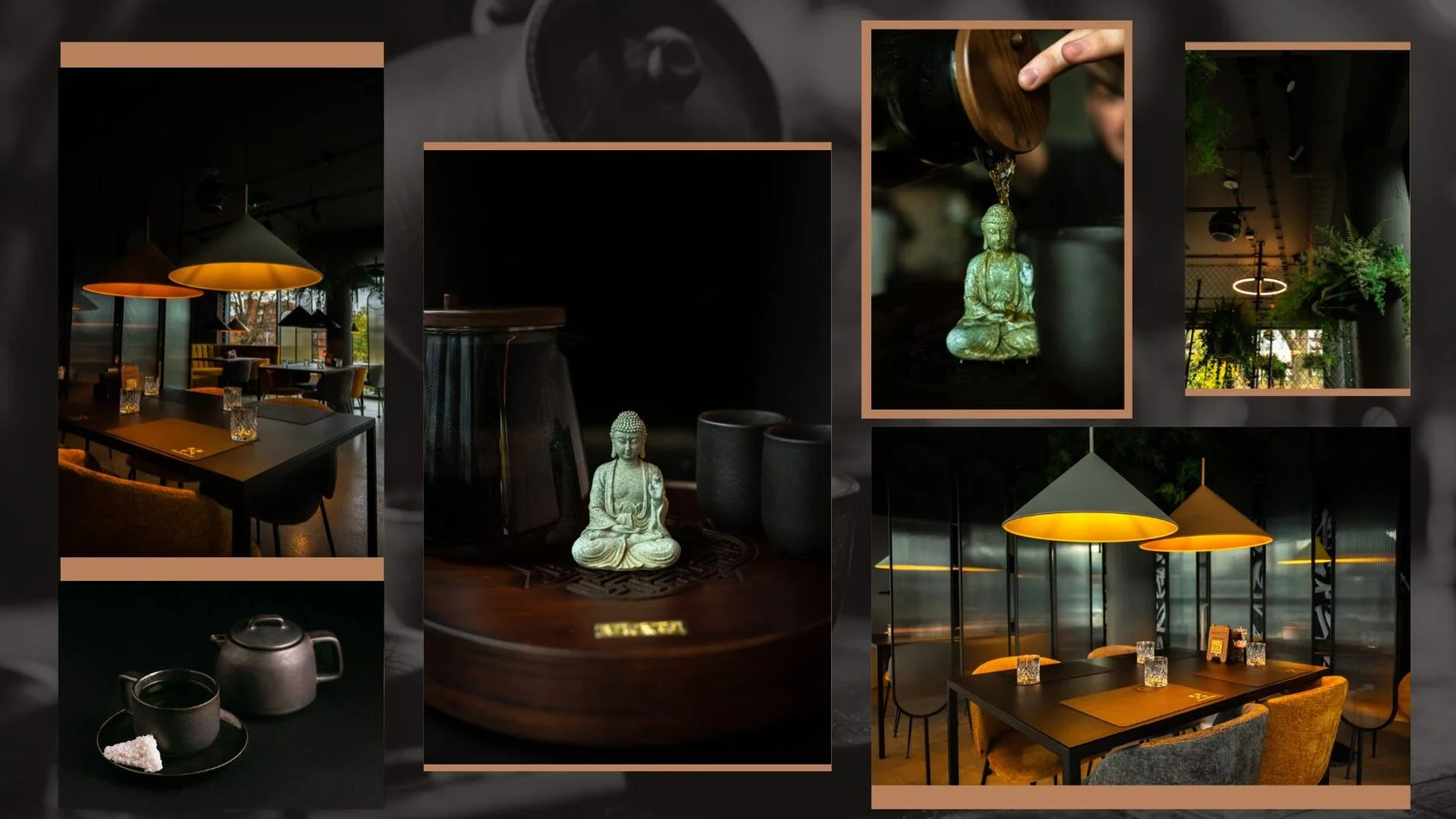
If you want to know the tea ceremony in a professional performance, we invite you to the Secret Room. In our Restaurant & Lounge you can experience the authentic Chinese tea tradition.In our collection you will find all kinds of tea - from the legendary Da Hong Pao from the Wuyi Mountains, to the earthy Shu Pu Erh from Yunnan Province, the exclusive Jin Jun Mei with honey flavor, the energizing Ginseng Oolong, to the smoked Lapsang Souchong. Each tea comes directly from proven manufacturers and is stored under optimal conditions.In the Secret Room, the tea ceremony is not just a tasting, but a real journey through Chinese culture. Watch as the master of ceremonies gently awakens the leaves, inhale the aromas that are released from subsequent brews, discover subtle nuances of flavors that cannot be experienced when drinking tea in a hurry. You can come alone for a contemplative Chinese tea session, invite friends to discover flavors together, or arrange a unique meeting business at a table full of unique teas.
Can you start without spending a fortune?
The tea ceremony in today's world is not an anachronism, but a necessary antidote to haste and superficiality. In an era when we drink most drinks “on the run”, the ceremony reminds us of what real attention tastes like.The tea traditions of China and their ceremonial preparation are not only a way to make well-brewed tea. It is a lesson in patience in an impatient world, a school of mindfulness in times of distraction, a space of silence in a noisy reality.The greatest gift of the ceremony is not the perfect brew, although it also has its meaning. These are moments of silence on a busy day, a space for reflection, an opportunity to truly meet with yourself and with others. It's a reminder that life is made up of small, consciously lived moments.We invite you to start this journey in the Secret Room. One cup can change your attitude not only to tea, but to the whole pace of life.Remember: the ceremonial tea tradition is not an attempt to achieve perfection, but a path to transition. Every deep breath over a steaming cup, every moment of focus on taste, every meeting at the tea table is a step towards greater peace and authenticity. Life is too short for poor tea and too long to drink it in a hurry.