Where to go for a walk in Gdansk? Places where you will feel the atmosphere of the city
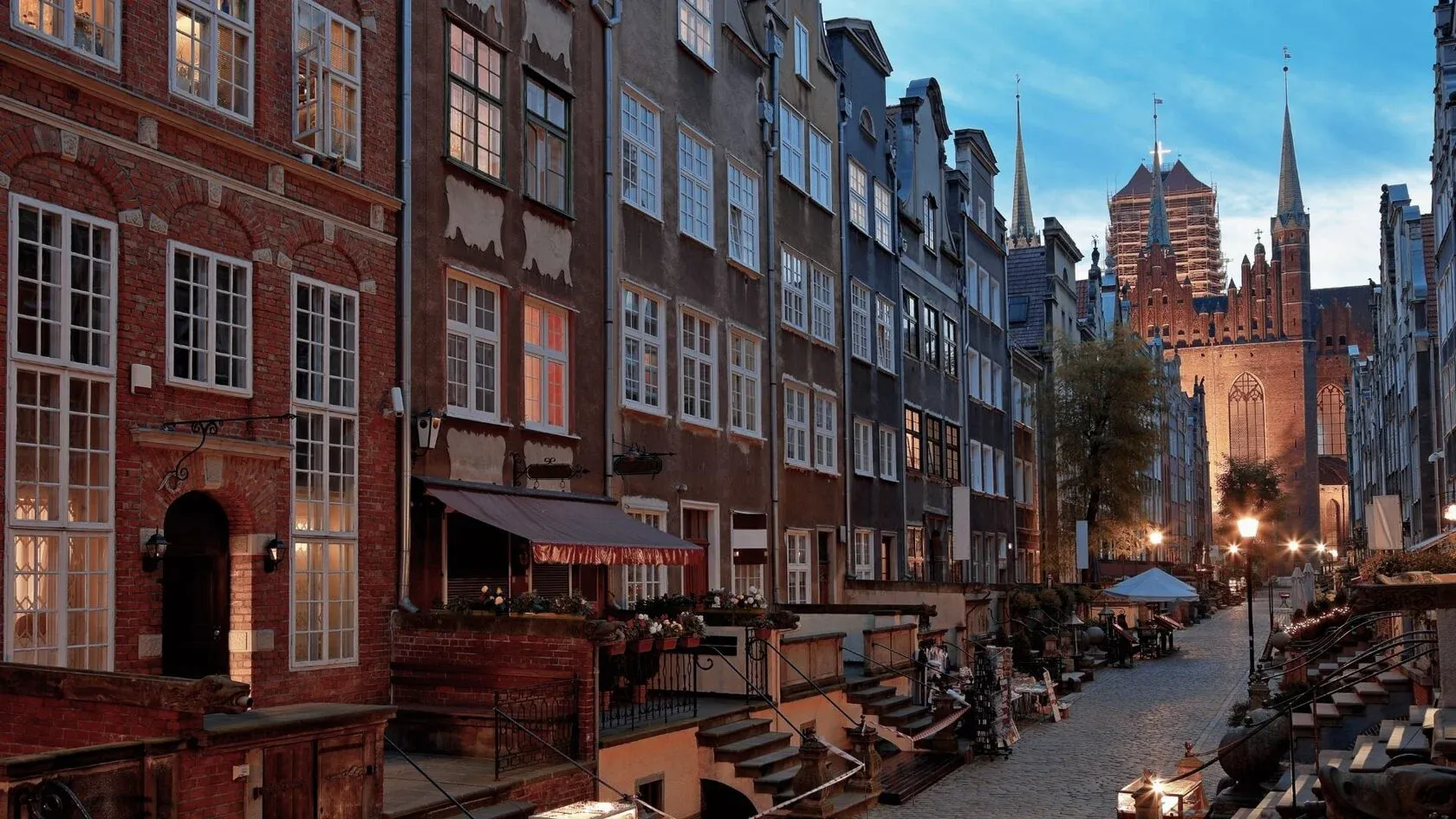
As you pass the next streets, you feel how history mixes with modernity, and the sea breeze carries tales of harbors and shipyards. If you are wondering where to go for a walk in Gdansk to feel the true spirit of this city, we have for you a guide to the places that the locals have loved. These are not popular tourist attractions, but authentic Gdańsk green areas and hidden corners where you can hear the heartbeat of the city.
Ship Repair Shops and their surroundings
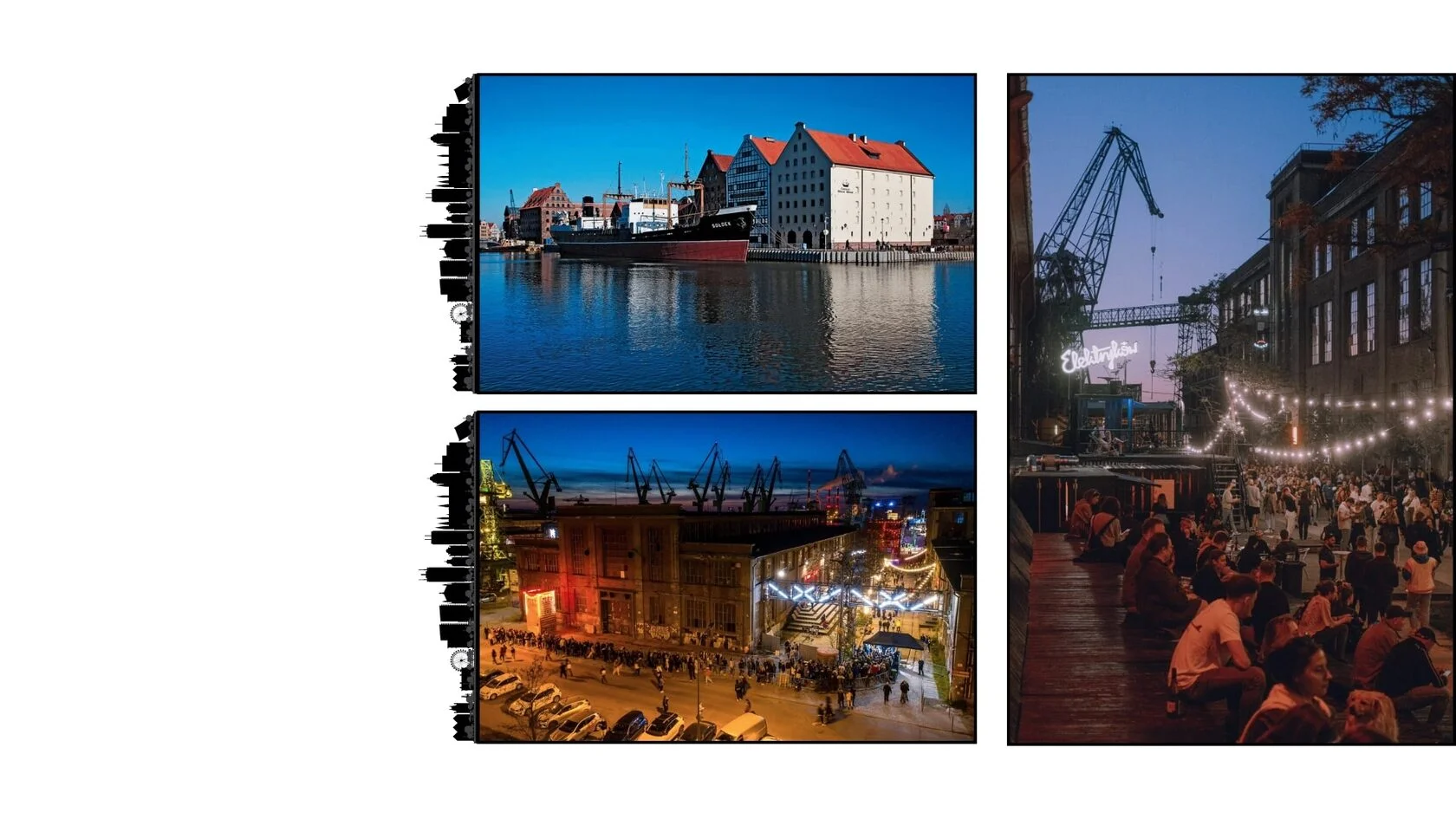
When you think of Gdansk, you can't miss the places that shaped not only the city, but the whole of Poland. Ship Repair Shops is more than an industrial past. This is a vivid testimony of the transformation that has taken place before our eyes.Walking through these areas, you pass the former production halls, where ships for the whole world used to be made. Today, many of these buildings have gained a second life as cultural centers and artistic spaces. Shipyard cranes that once carried steel structures now look at concerts and festivals taking place at their feet.
{{ctablock}}
Where culture grew out of concrete
Electricians Street deserves special attention in every guide to atmospheric walking places in Gdańsk. This small space (only 200 by 200 meters) was once bustling with the life of the electrical plants of the Gdańsk Shipyard. It was here, in 1980, that the workers made decisions that changed the fate of Poland. Today, Elektryków Street resembles Berlin's artistic courtyards. In summer, structures made of recycled materials are placed here and a real cultural town is created. In the evenings, electronic music is heard mixing with the sounds of port cranes, which are still working nearby. On Elektryków Street you will also find the B90 club - a former hall where parts for tankers were produced, and today the guests are the best DJs from the country.This place shows how the industrial architecture of Gdańsk was able to gain a second life. Industrial buildings were not demolished, but acquired a different function, retaining their austere character and history.
Raduni Canal in Siedlec
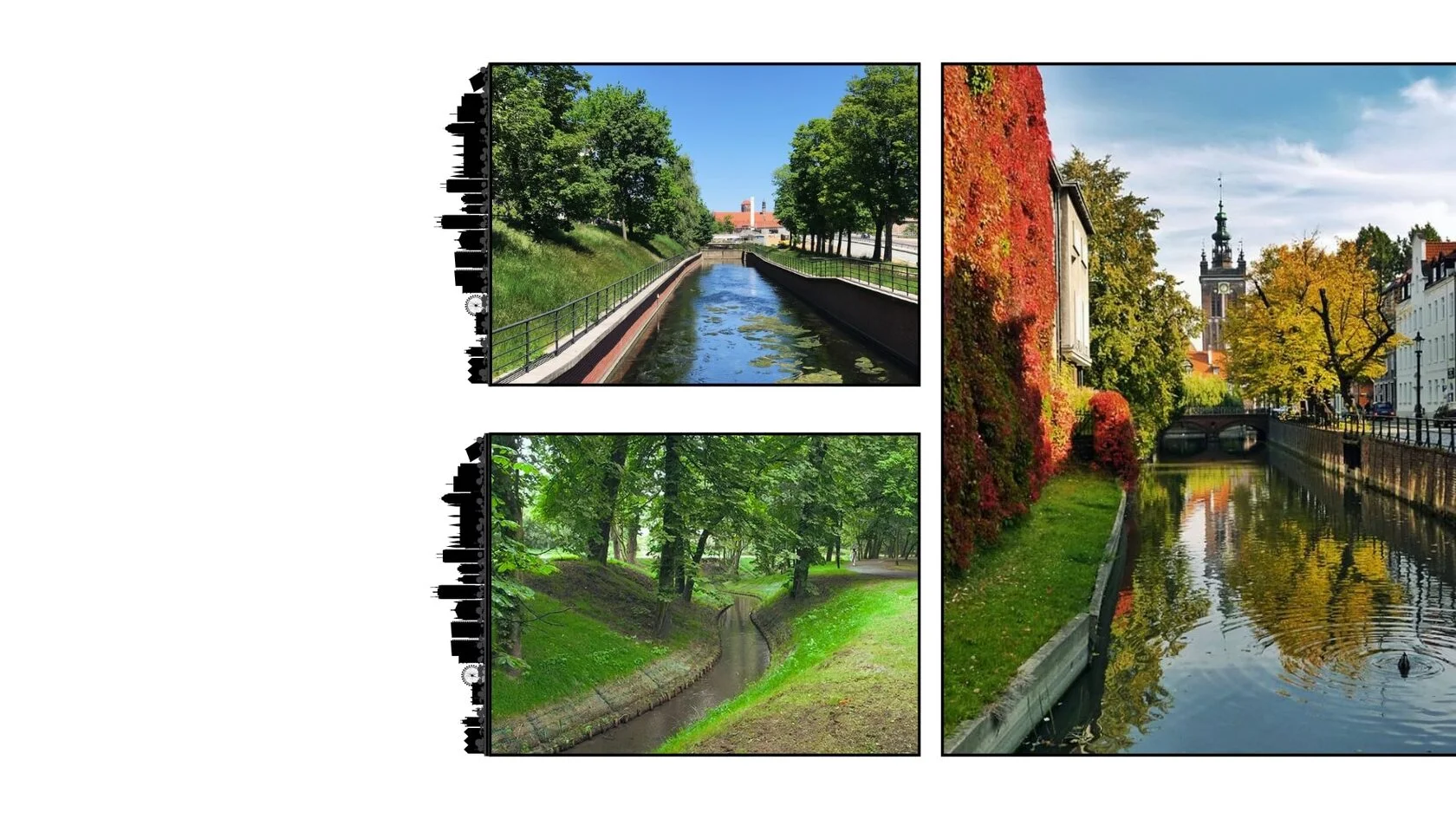
Water has always shaped the face of Gdańsk, and the Raduni Canal is its oldest and most important artery. This 14th century Teutonic trench runs through the whole city like a water trail of memory, telling the stories of millers, merchants and craftsmen. The Raduni Canal in the Siedlec area offers one of the most beautiful walks the city can boast. As you walk along its banks, on the left you pass the buildings of the district, on the right the flowing water that has driven the mills of Gdańsk for centuries. Every bridge, every footbridge has its own history. Especially magical is the place in the vicinity of the Orunski Park, where the Raduni Canal receives the waters of the Orunski Stream. Here nature and human engineering meet in perfect harmony. Old chestnut trees form a natural tunnel over the water, and their leaves rustle up tales of the past.In the Old Scots, stop at the 18th-century Church of St. Ignatius Loyola. Its baroque facade, one of only two in the whole of Gdańsk, is inspected daily in the waters of the canal. This view will show you why the ancient travelers called Gdansk “Venice of the North”. This is one of the most architecturally fascinating corners of the city, where Teutonic water engineering meets baroque beauty.
New Port and its quays
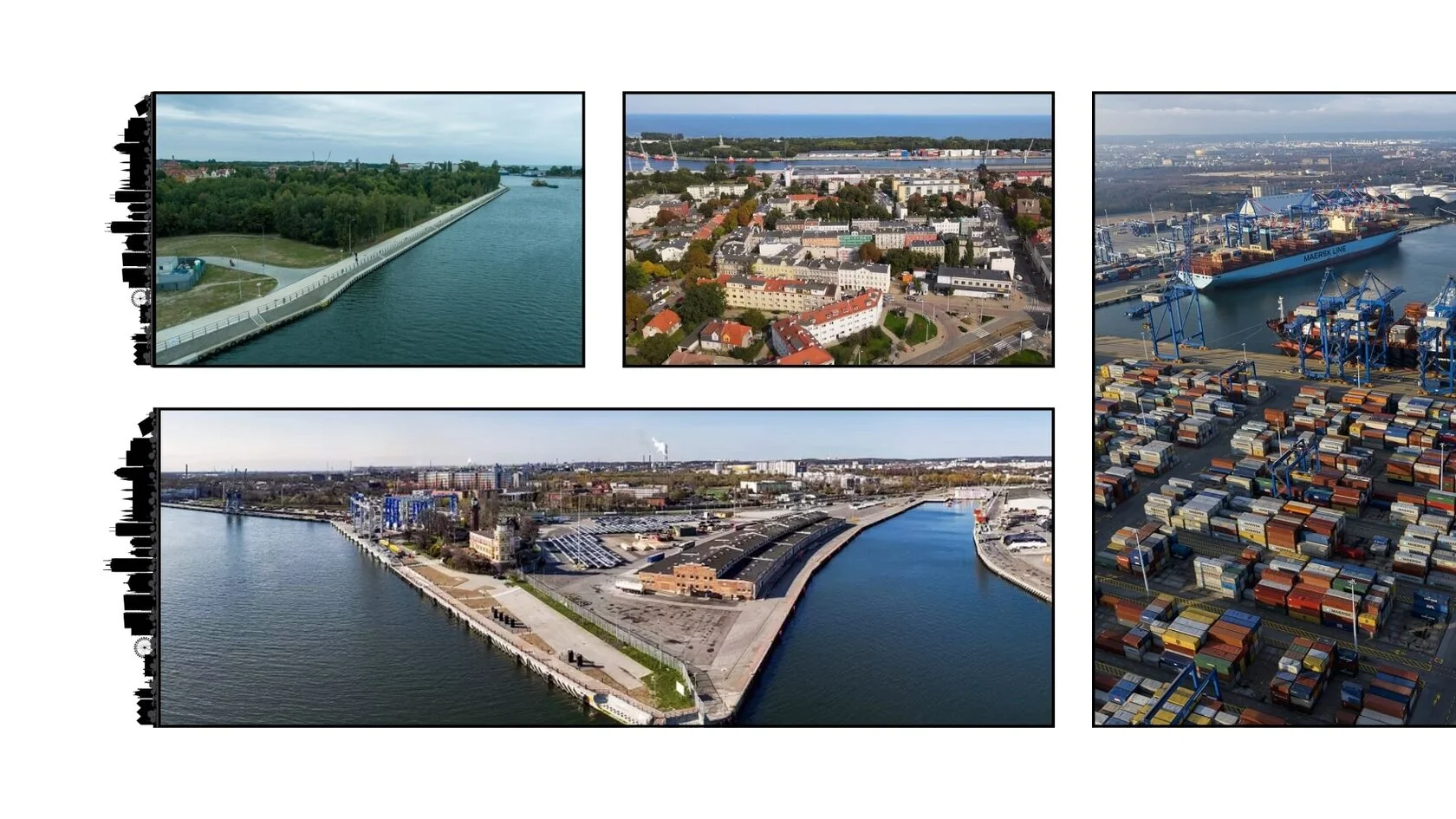
New Port is a neighborhood that does not pretend to be anything other than it is. There are no stylized tourist attractions here, but there is real port life, which has been going on for decades in the same rhythm. A walk by the sea in Nowy Port is an encounter with authentic Gdańsk and an excellent answer to the question What to see in Gdansk off the beaten tourist routes.Ziółkowski embankment is an excellent point to observe the inner port. You stand on a concrete quay, the wind blows your hair, and ships from all over the world pass before your eyes. You see the harbour captaincy and the historic lighthouse. You can also see the fortress of Wisłoujście. It is she who creates the panorama that best captures the maritime character of the city.As you move to the Grain Quay, the landscape changes. Port cranes and warehouses dominate here, and the air is oversaturated with the smell of the sea and gasoline. It's a place where you can talk to fishermen for hours about marine stories or just listen to the sound of waves hitting the wharf. Fishermen's Street and Dockers' Strike Street have names that speak for themselves. As you stroll through these streets, you pass cafes where sailors meet, and small shops that have served local communities for years. Here, the architectural landscape of Gdańsk has the face of a working man — practical, solid, unadorned.
Lostowicki Cemetery
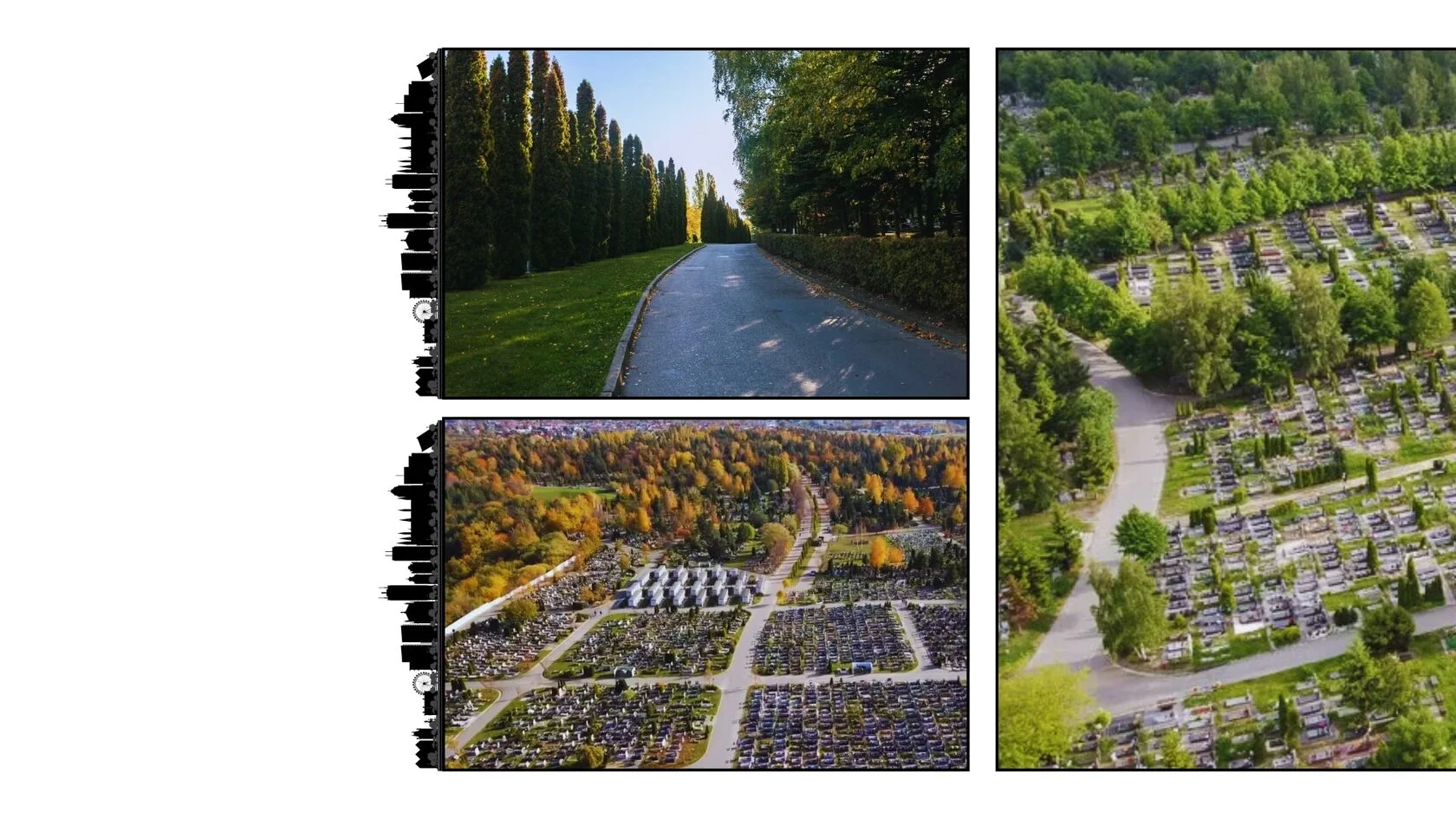
Maybe a walk around the cemetery sounds strange, but Lostowice Cemetery is one of the quietest and most beautiful places in the city. This historic necropolis from the 19th century is a real lesson in the history of Gdańsk, told through stone tombstones and mausoleums.
Old linden and chestnut trees form a natural roof here, under which there is a blessed silence. Gravel-strewn alleys lead between historic tombs, each with its own story. Here are buried merchants, craftsmen, artists, that is, all those who created Gdańsk over the last two centuries.Łostowicki Cemetery is also one of the most magnificent green walking areas of the city for lovers of dendrology. The trees growing here remember back to the 19th century, and their powerful crowns protect from the city bustle. Everywhere you look, you see examples of Gdańsk sepulchral architecture.
Wronia Górka in the district of Aniołki
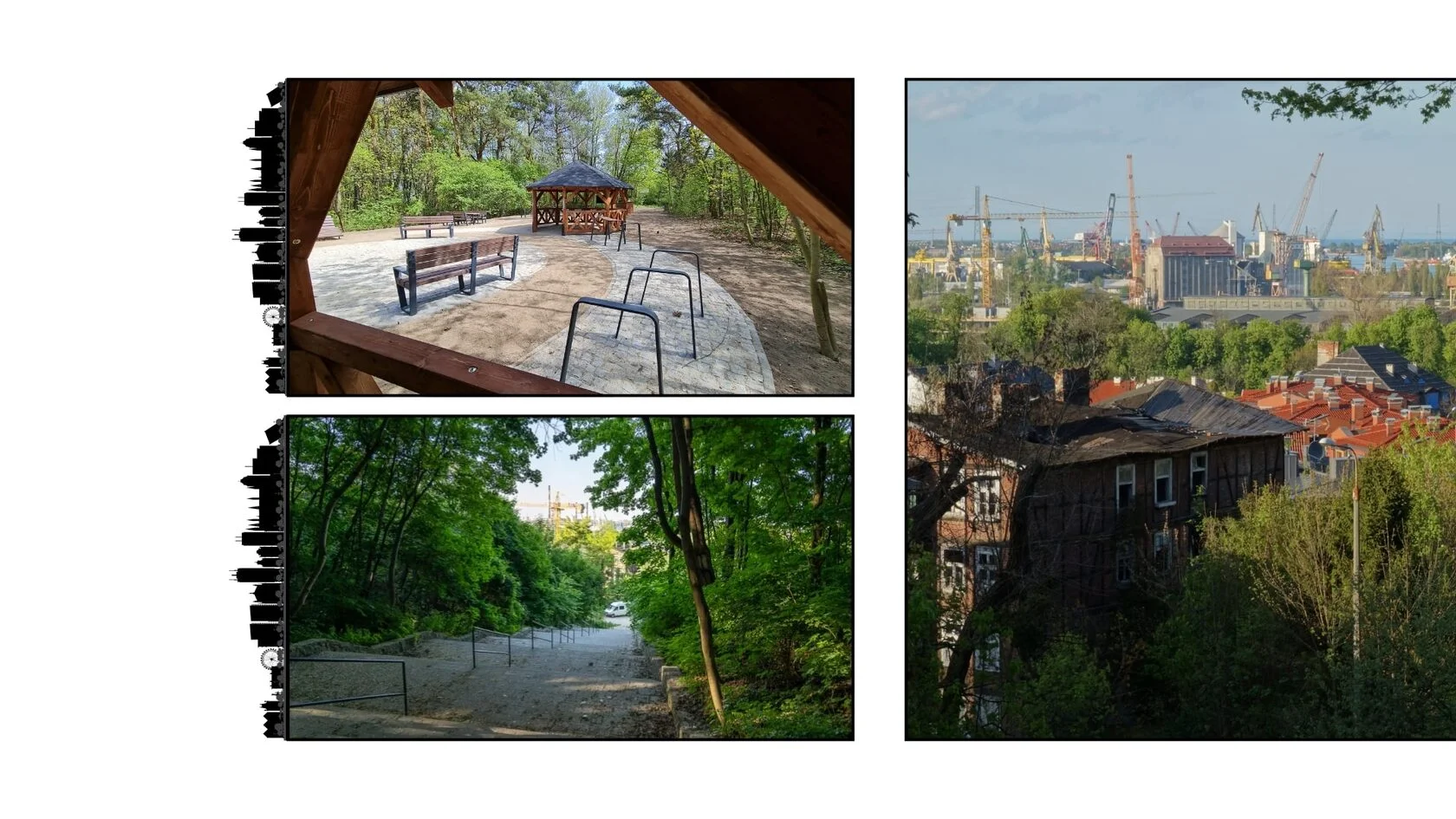
Wronia Górka is proof that the inhabitants of Gdańsk can take care of themselves. This wooded hill with an area of almost 11 hectares was forgotten for years, but thanks to the projects of the Civic Budget it has regained its splendor. Today, Wronia Górka is one of the most magnificent green spaces of the city for those who want to take a break from the city bustle without leaving it. New walking paths lead through natural forests, where benches and gazebos have been set up between the trees. There is also an outdoor gym and barbecue areas. It is all designed so as not to destroy the natural character of the place.This place has a special atmosphere. When you enter Wronia Górka from the side of Wronia Street, you leave behind the bustle of the city. The paths lead up, between pines and birches, and the silence is interrupted only by the voices of birds. From the highest points of the hill there is a view of the district of Aniołki and the city center.
Bastions of Bison and St. Gertrude
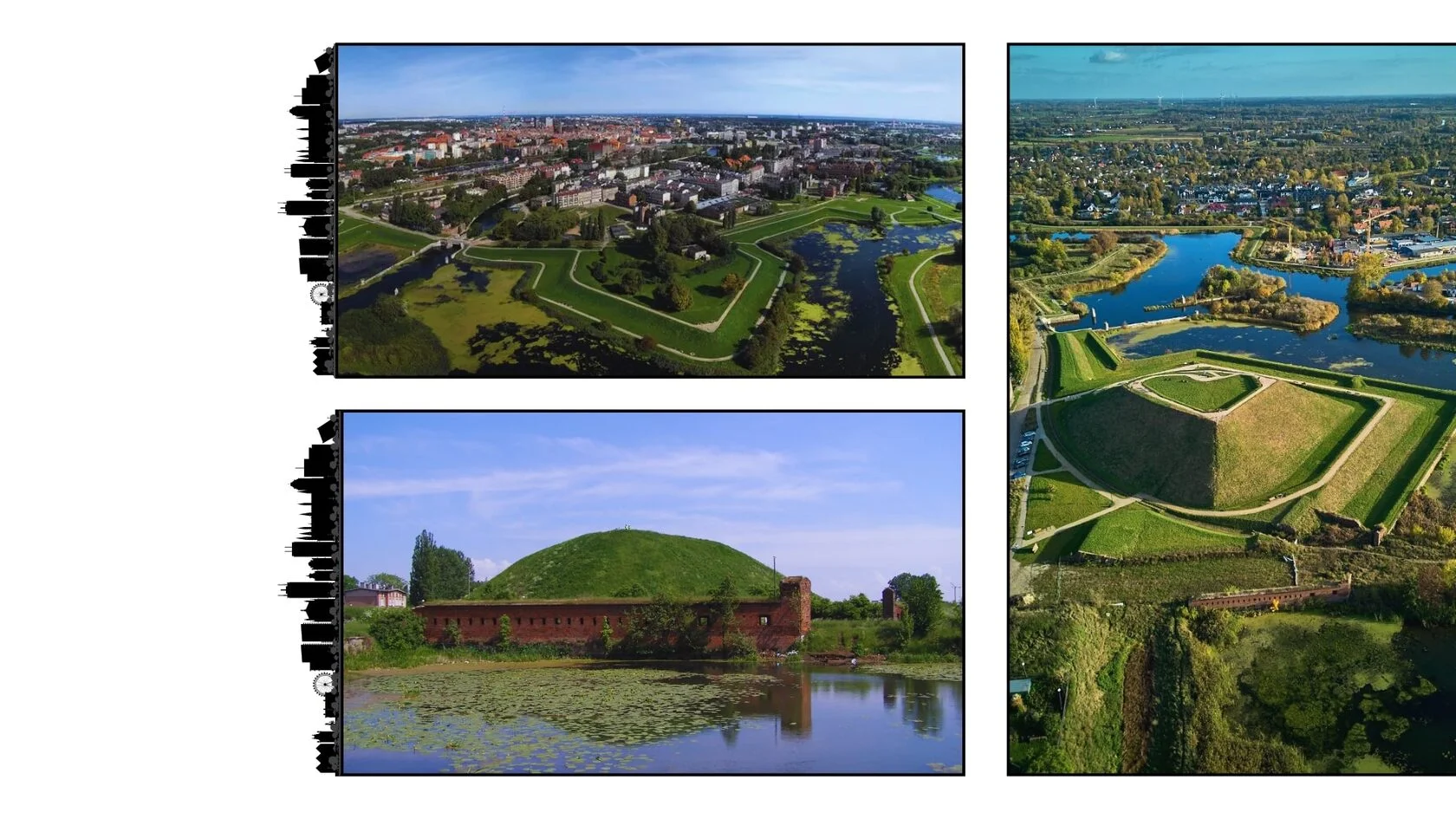
Gdansk is not only a port and a shipyard. It is also a fortress that has defended itself against invasions for centuries. The Bison and St. Gertrude Bastions in the Lower Town are fragments of old fortifications that today form a unique walking space. The walk is best to start from Wałowy Square, where you will get there by bus line 123. Right behind the building of the former Municipal Lombard from 1867 you enter the Bastion of St. Gertrude. This is the first point from which you can get an idea of the area and plan your further route. The Bison Bastion already offers real views. When you climb to its top, a panorama of the city opens before your eyes, and around you see the remains of defensive walls and a moat that once protected the inhabitants. Today, the moat is filled with greenery, and comfortable paths lead along its shores. The whole route along the bastions is a combination of history with nature. Defensive buildings of Gdańsk architecture are mixed here with modern land development solutions. The walk ends at Elbląska Street, from where it is easy to return to the center by public transport.
Orunski Stream Valley and Orunski Park
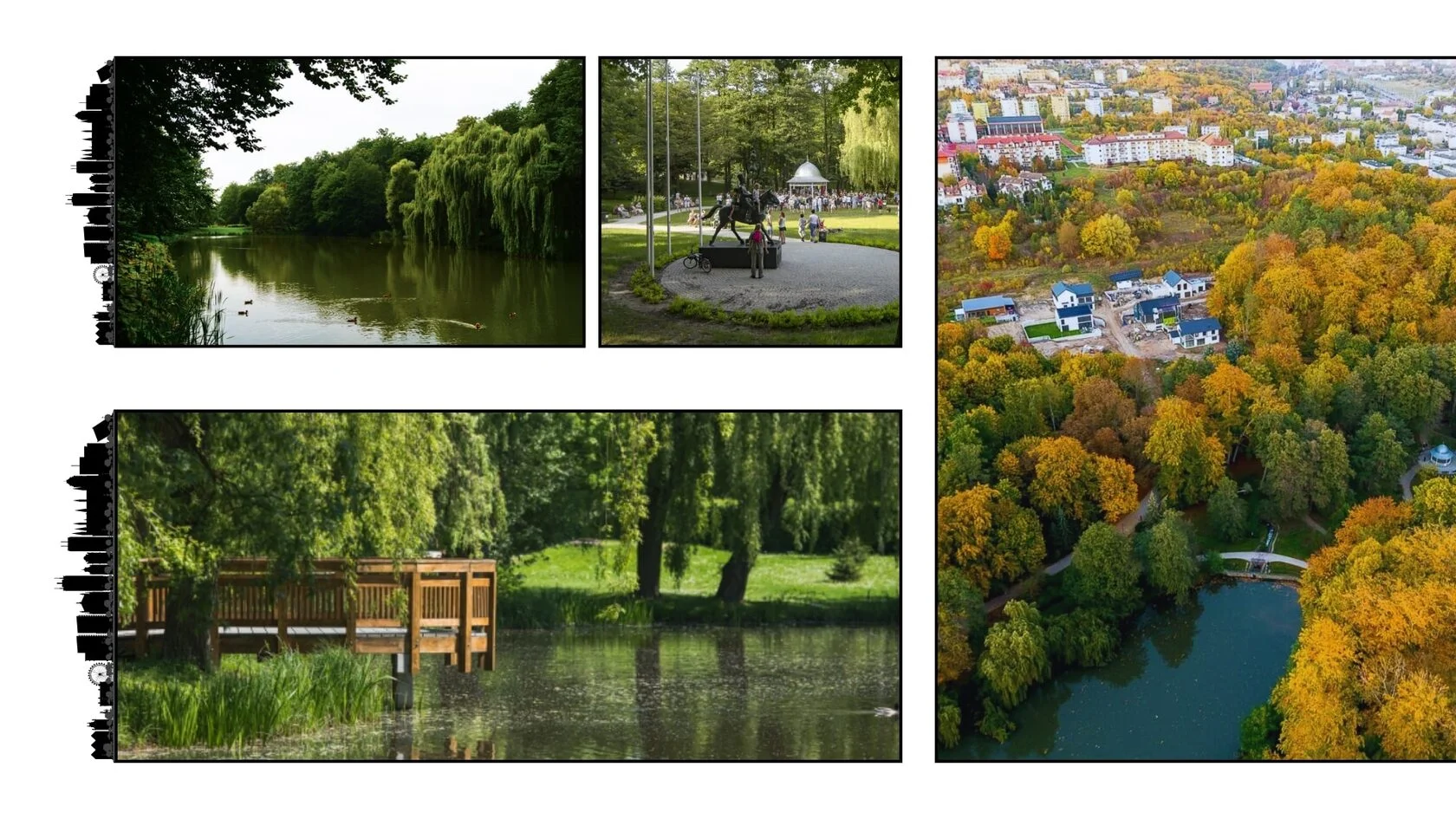
Park Orunski has undergone a real metamorphosis in recent years. After revitalization, it has become a place loved by families with children, runners and all those who seek contact with nature in the city center.The walk is best to start from the “Augustowska” Retention Reservoir, to which you reach by trams lines 2, 6, 7 or 11 to the loop “Łostowice Świętokrzyska”. You can go around the reservoir, but the real adventure begins when you turn left and head down the Orunski Stream Valley.Orunski Potok is one of the last natural rivers flowing through Gdansk. Its valley is a narrow, green ribbon that crosses the urban development. A recently renovated path leads along the banks of the creek, and the sound of water drowns out the city bustle. It is an ideal place for a walk with children, where you can watch ducks, listen to birds singing and look for traces of beavers.
Sea Horizons
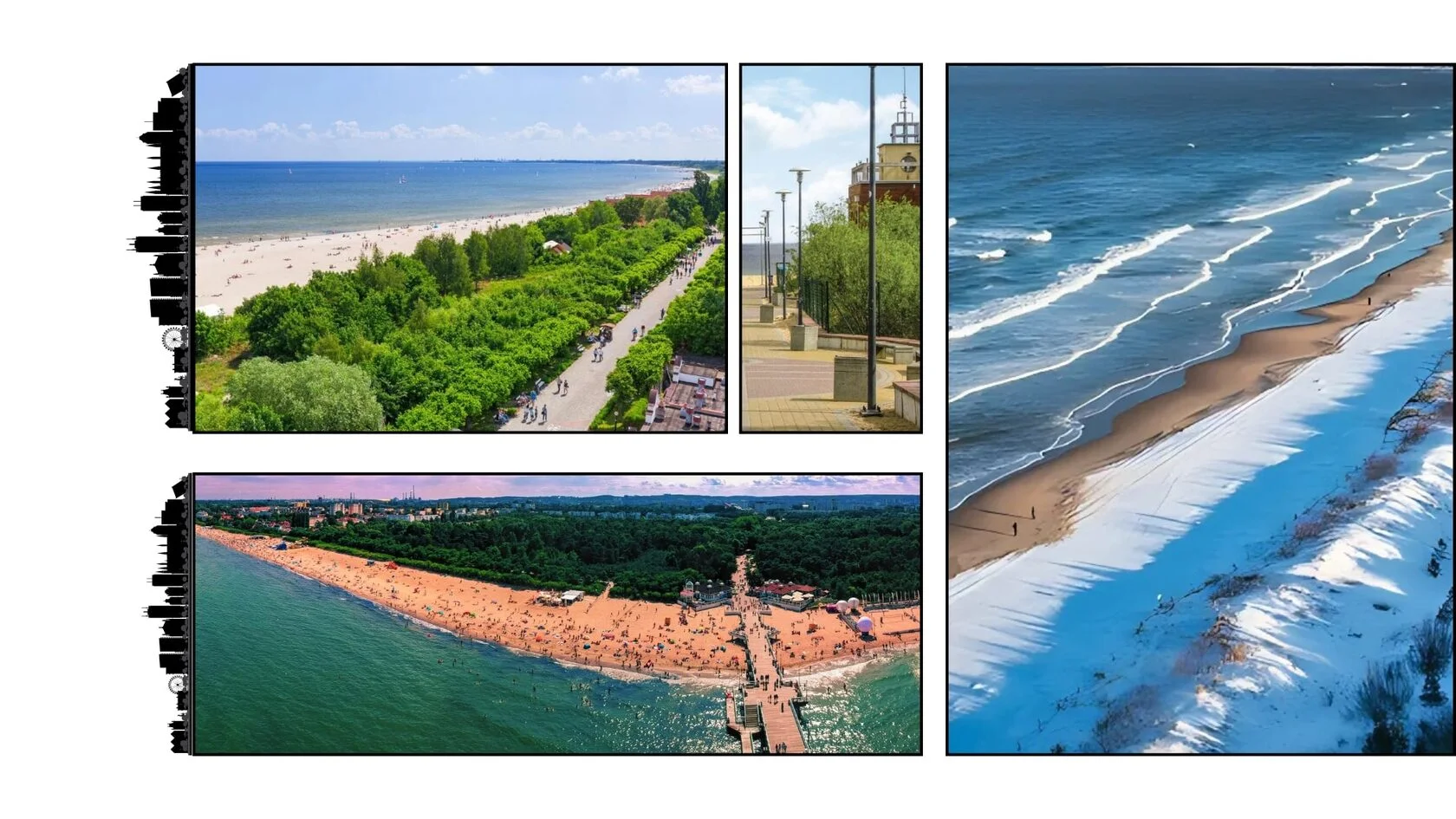
Gdansk without the sea is not Gdansk. Hiking along the seaside trails is a mandatory point of any visit to the city, but it is worth knowing which routes offer the most.The classic route of Brzezno-Jelitkowo is a promenade of several kilometers long, where you can walk along the shore of the Baltic or use comfortable sidewalks. Brzeźno offers more attractions: pier, restaurants, water equipment rentals. Jelitkovo is a quieter district with a wide beach and a park running along the coast.Stogi is an alternative for those who prefer less crowded places. The beach here is wider, and the infrastructure is less developed, which means more space and tranquility. You can get to Stogów by tram to Przeróbka, and then by a replacement bus.
Sobieszewska Island is a real gem for nature lovers. Eleven kilometers of wild beach, where you can meet seals resting on the shore. This place is perfect for a full day trip. The reserve “Bird Paradise” offers educational paths, where you can observe more than 200 species of birds.
Authentic faces of the seaside town
Gdansk is best known on foot. The unique walking corners of the city are not limited to popular tourist attractions. You discover the true atmosphere of the city in the industrial spaces of Elektryków Street, where culture grew out of concrete and steel. Over the waters of the Raduni Canal you will understand why Gdansk was called the “Venice of the North”. New Port has an atmosphere in which you will feel the maritime spirit of the city.Green areas and parks of the city are not only nature, but also history. The Lostowice Cemetery tells about the inhabitants who built the city over the past two centuries. Wronia Górka shows how residents can take care of their surroundings. Park Orunski is an example of a successful revitalization that revived the entire district. The architectural face of Gdansk is not only the monuments of the Main City. These are also industrial buildings that have gained a second life, fortifications turned into parks and port quays, where history mixes with everyday life. After a whole day of walking, you will always find Climatic restaurant, where with regional specialties you can summarize the impressions and plan further expeditions.
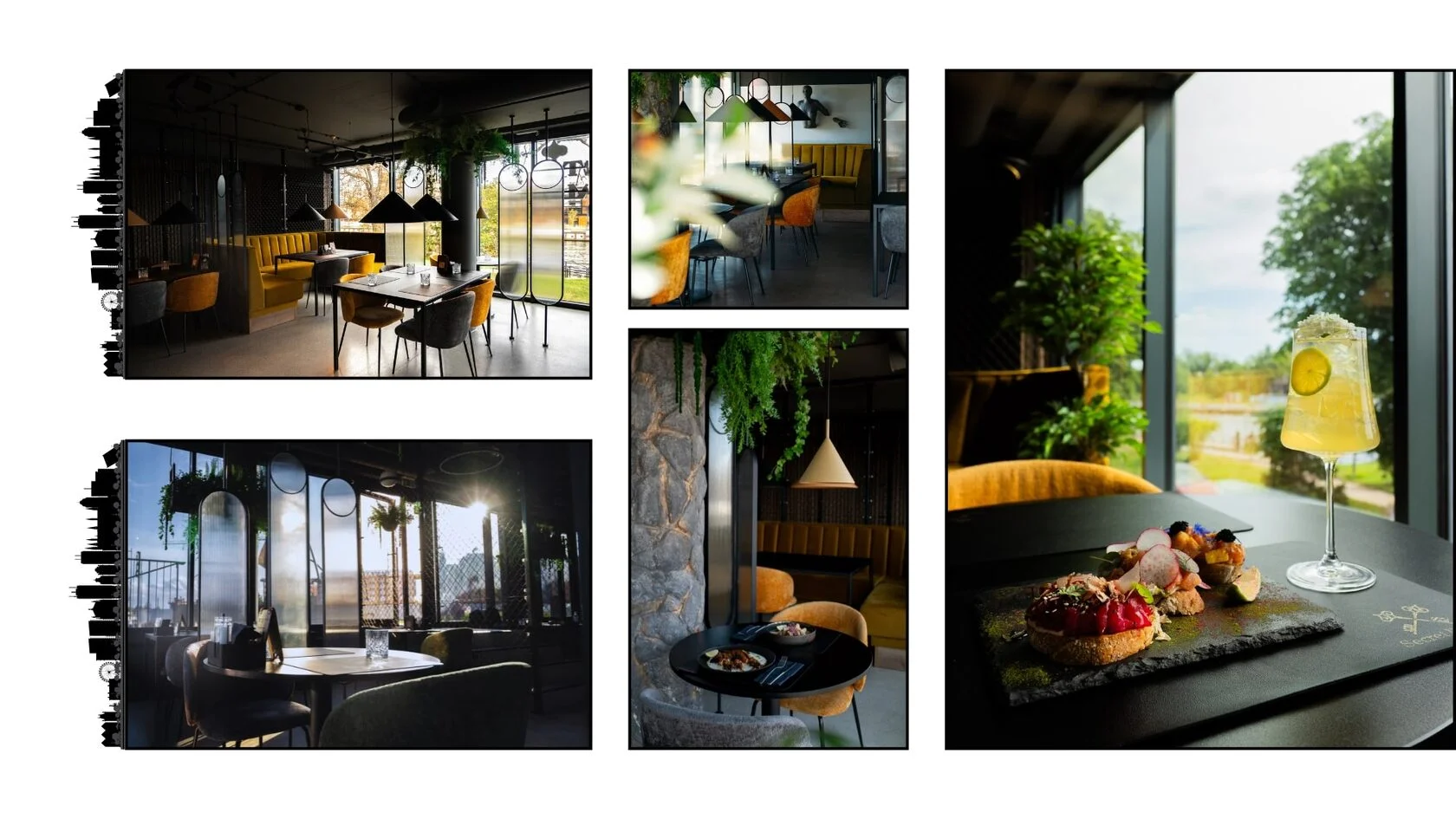
We especially recommend Secret Room — a unique restaurant and lounge in the center of Gdańsk, where the atmosphere of mystery is combined with exquisite cuisine. It is an ideal place to relax after long walks and share the impressions of exploring the city. Gdansk is a city that rewards curiosity. Just get out of the house and let the streets lead you to new discoveries!
{{ctablock}}