
What is Aperol? History, taste and way of serving
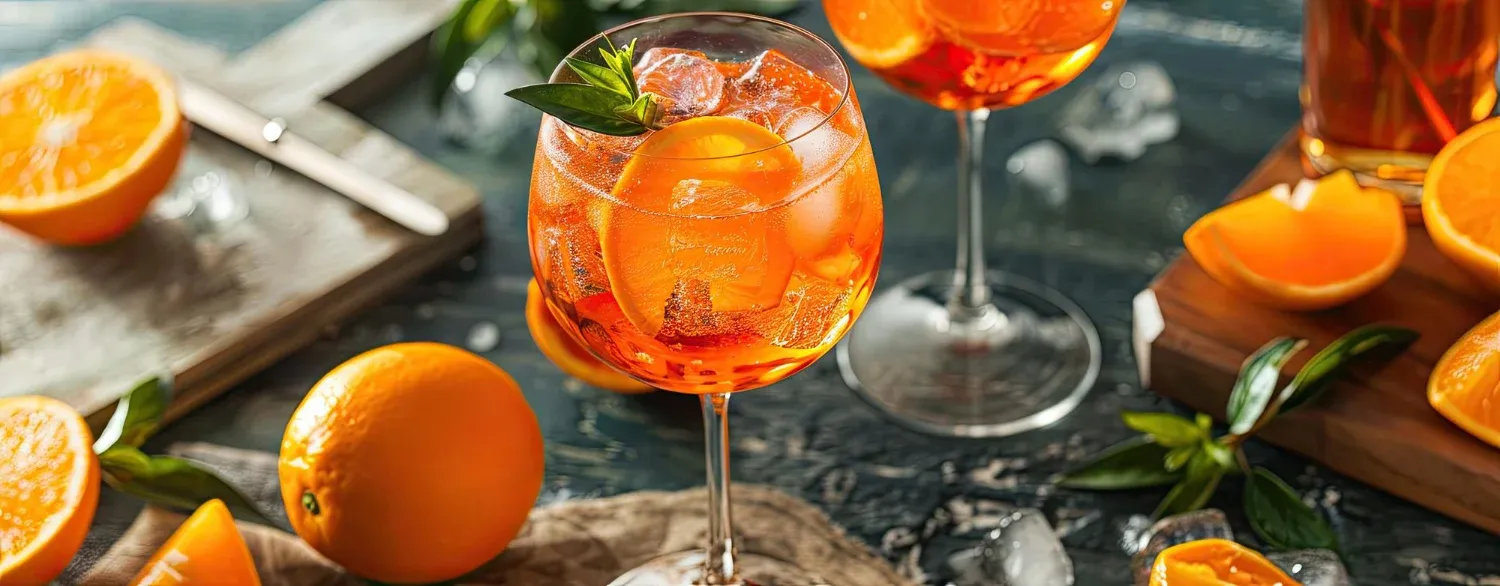
And it all started in Padua...
It's 1919. Brothers Luigi and Silvio Barbieri finish seven years of experimentation at their distillery in Padua. They were not looking for alcohol for an evening binge, but for something completely different - a drink that would whet the appetite before the family dinner. Their vision was revolutionary for those times. Liquors with a high alcohol content, strong and expressive, dominated. Barbers dreamed of something light, refreshing, colorful. The first presentation of their “invention” took place at the Padua fair, however, it did not arouse much interest.Real success came after the war. Changing Italy, new habits, the development of tourism - everything favored the aperitivo culture. It wasn't an accident. Society needed a moment of rest, space for conversation, slow preparation for evening meals.
Aperitif and the tradition of meetings, or a little about Italian culture
Before delving into the ins and outs of Aperol, it's worth understanding the context in which this well-known liquor was born. Aperitif, or what exactly does this word mean? It comes from the Latin “aperire”, which means “to open”, since it is supposed to open/strengthen our appetite before the main meal.An aperitif is much more than just an alcoholic drink. In Italian culture, the aperitivo is a real social ritual - time spent with friends and family, usually between 6 pm and 8 pm, with light snacks and refreshing drinks, when everyone prepares for an evening dinner.And what is an aperitif for gastronomy? It is a drink that should stimulate the taste buds, not satisfy hunger. Therefore, most aperitifs are characterized by a dry or slightly bitter taste, unlike sweet dessert liqueurs. What did the aperitif bring to the modern world? Today, this tradition has crossed the borders of Italy, and places such as Secret Room in Gdańsk they transfer the Italian aperitivo culture to Polish soil. They do not mindlessly copy Italian patterns, but adapt philosophy to our climate and rhythm of life. Here the aperitif takes on a new meaning: it becomes a space for business conversations, romantic meetings, celebrating friendships.
{{ctablock}}
The secret of the composition of a century ago
The composition of Aperol remains one of the best-kept secrets of the alcohol industry. More than 100 years have passed since the creation of the recipe, and the exact composition of Aperol is still known only to a few people in the Campari concert.What do we know for sure about the composition? It is based on an extract of a dozen herbs and botanicals, among which the following predominate:
- Bitter orange peels — give a characteristic color and citrus aroma
- Rhubarb — source of delicate bitterness
- Gentiane — a mountain plant that adds complexity to the taste
- Chinovets — subtle bitter notes
- Mediterranean Herbs — a mysterious blend that gives depth
Aperol also contains water, ethyl alcohol and sugar, which harmoniously combine all the ingredients.This caution in revealing details is not accidental. Aperol competes in the market with dozens of similar products. Its uniqueness lies precisely in the unique harmony of the components, which no one has managed to copy for more than a century.
Bittersweet symphony of flavors
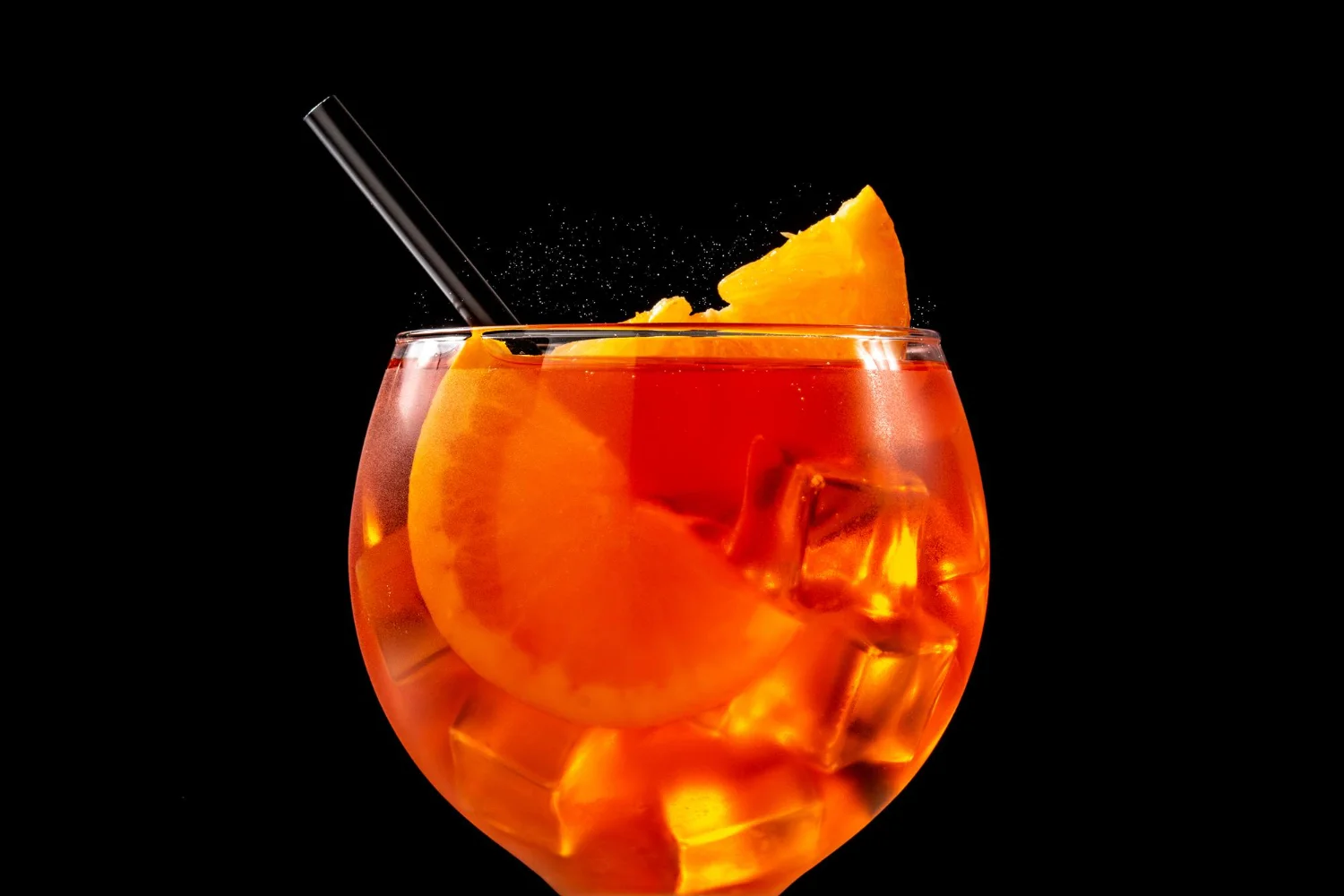
The first sip of Aperol is a journey through several layers of flavor. It starts off sweet when notes of fresh orange fill the palate. After a while, bitterness appears, but not aggressive as in Campari, but delicate, reminiscent of the peel of a pink grapefruit. In the background there are herbal Mediterranean touches, slightly spicy, with notes of anise and cloves. The whole is combined into a harmonious composition, where no element dominates over the others.This complexity, at 11% alcohol content, is a real art. It is easy to create an intense taste using high-percentage alcohol. It is much more difficult to achieve the richness of aromas at such a low power.
What is best to combine Aperol with
Although you can drink it alone with ice, the true potential of Aperol is revealed in the company of other ingredients. Classic prosecco perfectly balances its bittersweet character, while sparkling water adds refreshment.Citrus juices such as orange, grapefruit, lemon emphasize the natural flavor profile. The tonic introduces additional bitterness, which is an ideal option for lovers of dry drinks. Some people experiment with fruit syrups or even stronger alcohols.What to drink Aperol with — the best combinations:With sparkling wines:
- Prosecco — classic combination in Aperol Spritz
- Cava — Spanish alternative
- Champagne — in elegant version
With citrus juices:
- Orange juice — emphasizes the citrus character
- Grapefruit juice — adds freshness
- Lemon juice — in fizz cocktails
With sparkling waters:
- tonic — for lovers of dry flavors
- Soda water — classic addition to Spritz
- Sparkling flavored waters — citrus, peach
{{ctablock}}
From classic Spritz to modern creations
Aperol Spritz remains the most popular drink with this liqueur. The ratio 3:2:1 (Prosecco:Aperol:sparkling water) was approved by the International Bartenders Association, as the official standard.Spritz - a phenomenon that conquered the world. The history of this cocktail dates back to the 19th century, when Austrian soldiers, stationed in the Veneto region, diluted local wines with water to create a drink called “Spritz” (from the German “spritzen” - to splash) .And what does Spritz look like in its modern form? It's an evolution of that simple idea. The modern Aperol Spritz was born when Aperol began to be added to the traditional mixture of wine and water, creating a cocktail with a unique taste and character.The world of cocktails does not stand still. Fresh lemon juice and sugar syrup are added to the Aperol Fizz drink. In the Paper Plane cocktail, Aperol combines with bourbonen and Amaro Nonino. And at High Noon, rum and orange juice are introduced. Each of these drinks shows a different face of Aperol. Spritz is light and holiday. Paper Plane - elegant and complex. In creations with vodka or whiskey - more characterful and masculine.
Italian spirits and the tradition of dolce vita
Italian spirits are much more than just drinks — they are cultural vehicles that introduce the essence of the Italian way of life. Aperol occupies a special place in this family, representing the light, social side of Italian drinking culture.Italian alcohols are traditionally divided into categories:
- Aperitifs (Aperol, Campari, Punt e Mes) — before meals
- Digestive (grappa, amaro, limoncello) — after a meal
- Wines (Prosecco, Chianti, Barolo) — during the meal
It's not about getting drunk, it's about celebrating the moment, building relationships, enjoying company. This is the philosophy of “dolce vita” - the sweet life, where pleasure takes precedence over hurry.It differs from the French aperitif culture or the Spanish tradition of tapas. He has his own unique character - warm, family, open to others.
In the Secret Room, tradition meets innovation
Secret Room in Gdańsk is a space that perfectly understands the spirit of the Italian aperitivo. The combination of restaurant, lounge and bar has created the perfect setting for experimenting with classic recipes. This unique place has created the perfect setting for celebrating culture The Best Cocktails. Their menu includes not only pure Aperol, but also the author's “Call Me Aperol”, a drink that is a perfect example of how traditional Italian spirits can gain new life in Polish interpretation.Secret Room is more than a place for an aperitif — it is a space for relaxation and meetings, where, according to the philosophy of aperitivo, more important than the drink itself is the experience shared with loved ones. The atmospheric interior and expert service make every cocktail part of a larger story.